Relationship & Intimacy Issues in Dads
Therapy for Fathers Who Want Stronger Marriages, Deeper Connection, and Real Change
Becoming a father changes everything—including your relationship. Many men are surprised by how much strain shows up in marriage after kids: less emotional closeness, less sex, more conflict, and more distance. For many dads, this doesn’t feel like a “relationship problem”—it feels like failure, pressure, or emotional shutdown.
The truth is this: relationship and intimacy struggles in fathers are common, understandable, and treatable. With the right therapeutic support, men can rebuild connection, strengthen their marriage, and show up with confidence as both partners and fathers.
Common Relationship & Intimacy Struggles Dads Experience
Many fathers come to therapy reporting:
Emotional distance or growing resentment toward their partner
Increased conflict or frequent arguments that never feel resolved
Feeling criticized, rejected, or “never good enough”
Loss of sexual desire or mismatched libido after becoming parents
Avoidance of intimacy due to stress, exhaustion, or performance anxiety
Difficulty expressing needs, emotions, or vulnerability
Feeling more like roommates or co-parents than romantic partners
For men, these struggles often trigger shame, anger, withdrawal, or over-functioning—rather than open communication.
Why These Issues Hit Fathers So Hard
From a trauma-informed perspective, many dads are carrying:
Unresolved attachment wounds from childhood
Learned beliefs that men should “handle it” alone
Nervous system overload from work, parenting, and financial pressure
Fear of rejection or inadequacy that shows up as emotional shutdown
Generational models of marriage where intimacy was never talked about
When stress is high and emotional safety is low, men often default to protection strategies—withdrawal, defensiveness, anger, or silence—not because they don’t care, but because their nervous system is in survival mode.
Therapy helps men shift from self-protection to connection.
How Psychotherapy Helps Dads with Relationship & Intimacy Issues
Working with a therapist who specializes in men and fathers allows you to:
Understand your emotional triggers and relational patterns
Learn how to communicate needs without escalation or shutdown
Rebuild trust, safety, and emotional closeness
Strengthen sexual intimacy without pressure or shame
Break generational cycles you don’t want to pass on to your kids
Lead your marriage with clarity, confidence, and emotional maturity
This work is not about blame—it’s about ownership, skill-building, and growth.
Therapeutic Approaches Used in This Work
The Gottman Method for Couples & Relationships
The Gottman Method is one of the most well-researched approaches to relationship health. Developed through decades of research on married couples, it focuses on what actually predicts long-term success.
Core elements include:
Reducing destructive conflict patterns (criticism, defensiveness, contempt, stonewalling)
Building emotional friendship and admiration
Improving communication during conflict
Strengthening trust and commitment
Creating shared meaning in marriage
The approach is practical, structured, and highly effective for fathers who want clear tools—not just insight.
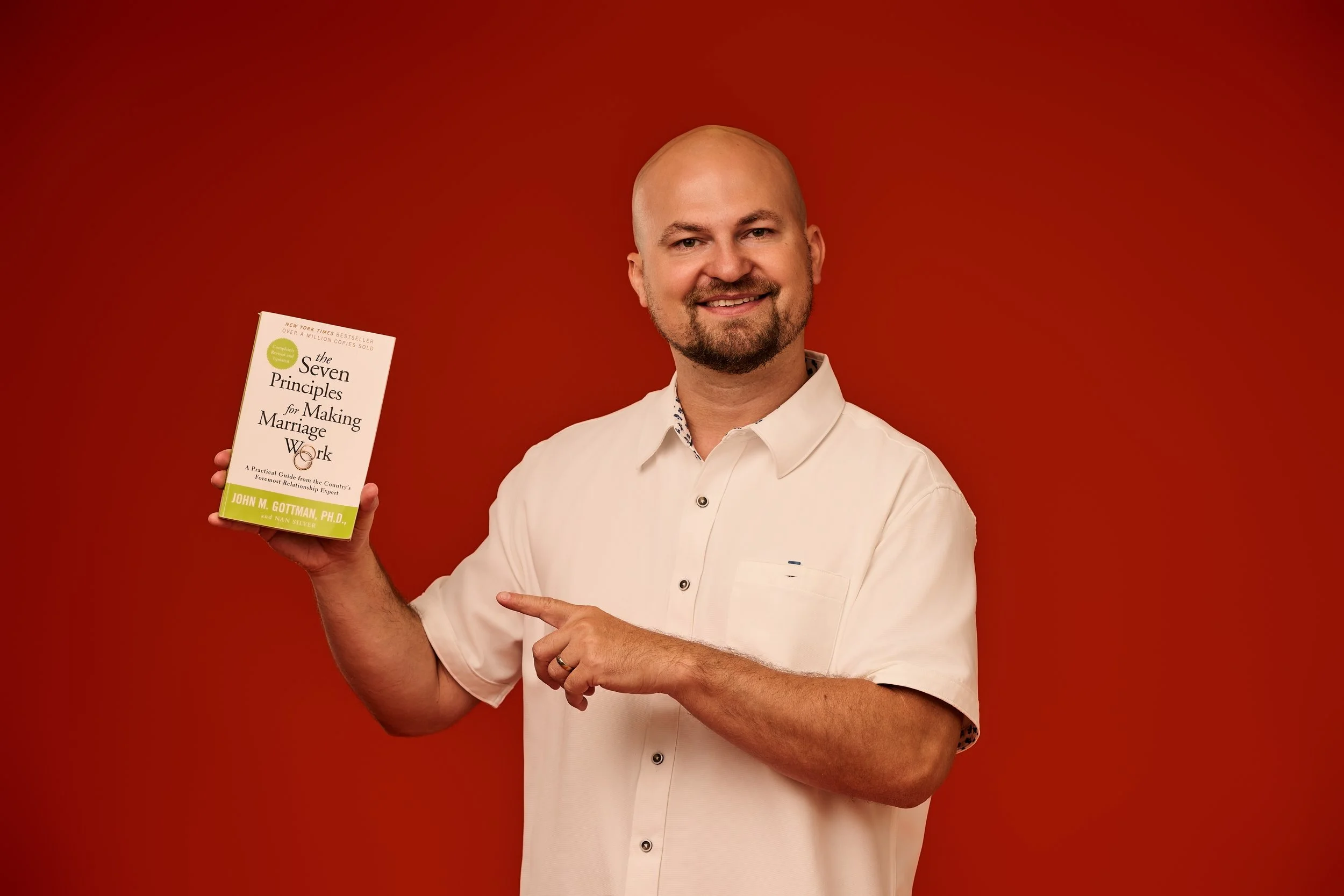
Based on the work of the Gottman Institute and the book The Seven Principles for Making Marriage Work.
Imago Relationship Therapy
Imago Relationship Therapy helps men understand why they react the way they do in intimate relationships.
This approach focuses on:
How early attachment experiences shape adult relationships
Understanding emotional triggers instead of reacting to them
Creating safe, structured dialogue between partners
Healing relational wounds through connection rather than withdrawal
For many dads, Imago work helps shift from “Why are we always fighting?” to
“What is this conflict trying to show me about myself and my partner?”
Developed by Harville Hendrix and Helen LaKelly Hunt, Imago is especially helpful for men who struggle with emotional expression but want deeper intimacy.
Men’s Relationship Work Through “The 7 Principles for Making Marriage Work” Courses
In addition to individual psychotherapy, fathers can deepen their growth by attending Maxim’s quarterly men’s courses, based on The 7 Principles for Making Marriage Work.
These courses provide:
Practical relationship tools in a male-centered learning environment
Skill-building around communication, conflict, and emotional attunement
Accountability and normalization among other men
A structured way to apply relationship principles in real life
For many men, combining therapy with group-based learning accelerates progress and reinforces change.
A Strength-Based Message for Dads
Wanting help with your relationship does not mean you’re weak.
It means you care deeply about your family, your marriage, and the man you’re becoming.
Healthy intimacy isn’t about perfection—it’s about presence, repair, and leadership.
When fathers do this work, the benefits ripple outward:
Stronger marriages
Healthier emotional modeling for children
Less stress, resentment, and emotional isolation
More confidence as both a partner and a parent
Take the Next Step
If you’re a father struggling with relationship or intimacy issues, you don’t have to figure this out alone. With the right support, real change is possible.
Psychotherapy offers men a structured, respectful, and effective path toward stronger relationships and deeper connection.